
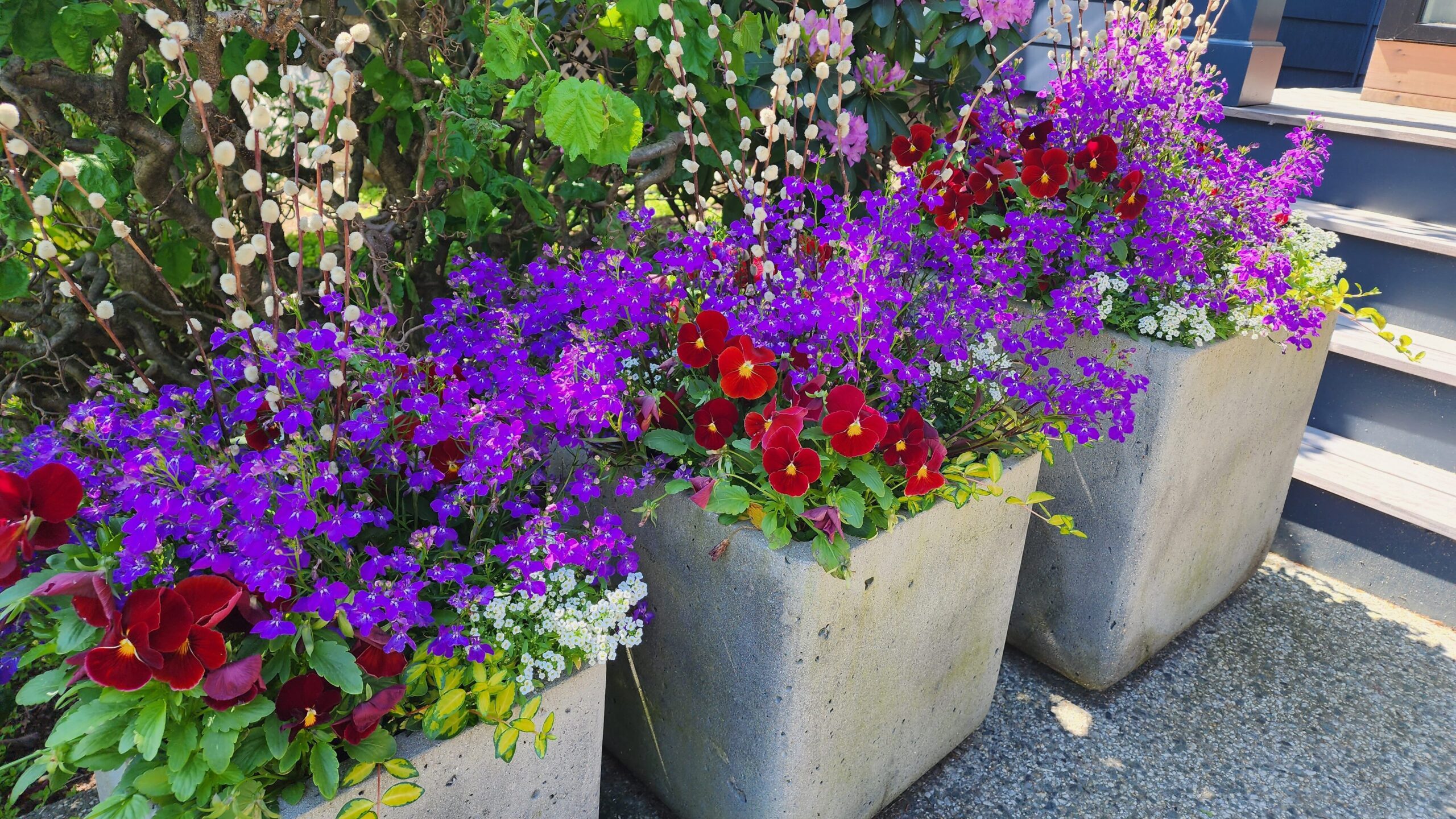
If you’ve ever dreamed of fresh herbs on your windowsill, juicy tomatoes on your balcony, or lush greenery brightening your living room, container gardening is your perfect gateway. Here in Southern New Hampshire, where seasons shift dramatically and space can be limited, container gardening offers flexibility, beauty, and a way to connect with nature year-round, whether indoors or out.
At Painted Fern Gardening, we believe container gardens should be both functional and artistic, blending sustainable practices with creative design. Whether you’re a beginner or a seasoned green thumb, this guide will walk you through everything you need to know to make your plants thrive in pots, planters, and other unique containers.
How to start container gardening for beginners

Starting a container garden is refreshingly simple:
- Choose the right container – It could be ceramic, wood, metal, or even a repurposed basket
(as long as it has drainage holes).
- Pick your plants – For first-timers, herbs like basil, mint, and thyme are forgiving. Cherry
tomatoes and salad greens are also great starters.
- Use the best potting mix – Avoid garden soil; instead, go for a high-quality, lightweight
potting mix formulated for container gardening. This ensures proper aeration and water
retention.
- Place wisely – Different plants have different sunlight needs – more on that below.
What size containers for vegetables?
Size matters in container gardening, especially for vegetables. As a general rule:
- Leafy greens: 6–8 inches deep
- Peppers: 10–12 inches deep
- Tomatoes: 14–18 inches deep (and wide)
- Root crops like carrots: at least 12 inches deep
When in doubt, choose a larger pot. It holds more soil, which keeps moisture more consistent and reduces watering frequency.
Best potting mix for container gardening
The ideal potting mix is light, airy, and full of organic matter. Look for:
- Coconut coir or peat moss for water retention
- Perlite or vermiculite for aeration
- Compost for nutrients
For sustainable gardening in Southern New Hampshire, locally made compost blends can be a fantastic option, cutting down on transportation and supporting the local soil cycle.
How often to water container plant
Container plants dry out faster than in-ground gardens. In warm weather, you might water once a
day—sometimes twice for small pots in full sun. In cooler months or with indoor plants, check the
soil first. Stick your finger an inch deep – if it feels dry, it’s time to water. Always water deeply
until you see it drain from the bottom.

What vegetables grow best in containers?
Some vegetables love the cozy, controlled environment of containers:
- Cherry tomatoes
- Lettuce and spinach
- Peppers
- Radishes
- Bush beans
These crops are productive in small spaces, perfect for porches, patios, and even sunny windows.
Container gardening drainage tips
Without good drainage, roots can rot. Always:
- Ensure containers have holes at the bottom.
- Use pot feet or risers to keep pots off the ground.
- Add a layer of coarse material—like broken pottery or pine bark—at the base.
And remember, never let water sit in saucers for long periods.


How much sun do container plants need?
Most vegetables and herbs need 6–8 hours of direct sunlight daily. For indoor plants, place them near a south-facing window or use grow lights during darker New Hampshire winters. Shade- tolerant plants like ferns, lettuce, and parsley will do well in less intense light.

Best containers for herb gardening
Herbs like rosemary, thyme, oregano, and basil thrive in clay or terra cotta pots, which allow excess moisture to evaporate. For a charming touch, mix and match colorful ceramic planters for your kitchen windowsill. For outdoor herb gardening, long planter boxes make harvesting easy and look lovely on a porch railing.
Can you grow fruit trees in containers?
Absolutely! Dwarf varieties of apples, peaches, and figs do beautifully in large containers, at least 15–20 gallons in size. With the right care, you can enjoy homegrown fruit even in small spaces.
Just remember to repot every few years as the roots fill the container.

Container gardening mistakes to avoid
- Overwatering – Roots need air as well as water.
- Using garden soil – It compacts and suffocates roots in pots.
- Ignoring fertilizer – Container plants deplete nutrients quickly.
- Choosing the wrong size pot – Too small, and plants become root-bound.
How to fertilize container plants
Since containers can’t draw nutrients from surrounding soil, fertilizing is essential. Use a balanced
organic fertilizer every 3–4 weeks for vegetables and herbs. For flowering indoor plants, look for a
bloom-boosting formula with extra phosphorus. Slow-release pellets are a good low-maintenance
choice for busy gardeners.
Best Indoor Plants for Containers
For a lush, calming indoor space, try:
- Snake plant (low maintenance, air purifying)
- Peace lily (tolerates low light)
- Pothos (trails beautifully)
- African violet (bright blooms)
Pair them with decorative containers that complement your home’s style.
Container Gardening in Small Spaces

Even the tiniest porch or balcony can host a vibrant container garden. Use vertical plant stands,
railing planters, and hanging baskets to maximize growing space. Mixing edibles and ornamentals
adds visual interest while keeping your harvest close at hand.
Transform Your Space Today
At Painted Fern Gardening, we see container gardening as a living art form. From thoughtfully chosen pots to sustainable soil mixes and plant pairings that change with the seasons, every container tells a story. Whether you’re looking to grow your own food, brighten your indoor space, or bring creative beauty to your porch, our designs combine artistry with horticultural expertise rooted in the rhythms of Southern New Hampshire’s seasons.

Contact us today to schedule your consultation and begin your journey toward creating an enchanting garden that will bring joy, beauty, and ecological benefits to your outdoor space for years to come.
Ready to transform your landscape into a thriving garden? Contact Painted Fern Gardening at (603) 580-3840 or visit paintedferngardening.com