
Hydrangea pruning is an essential practice for maintaining healthy, vibrant shrubs that produce abundant blooms throughout the growing season. In New England, where winters can be harsh and unpredictable, understanding the proper timing and techniques for pruning these beloved ornamentals becomes even more critical. Whether you’re tending to a cottage garden in New Hampshire or managing a formal landscape in Massachusetts, mastering the art of hydrangea care will ensure your plants thrive year after year in our unique climate.
Ready to transform your hydrangeas into showstopping garden features? Keep reading to discover the timing, techniques, and regional tips that will help your shrubs flourish in New England’s distinctive growing conditions.
Understanding hydrangea pruning for New England gardens
The key to successful hydrangea care in New England lies first in identifying which type of hydrangea is growing in your yard. Different varieties require very different approaches, and pruning at the wrong time can eliminate an entire season of blooms. In our region, gardening in the winter months requires careful planning, as our cold temperatures and occasional late-spring frosts can damage new growth on improperly pruned plants.

What month do you cut back hydrangeas?
The timing of hydrangea pruning depends mostly on the specific variety. Make sure you identify your Hydrangeas correctly:
Smooth hydrangeas (H. arborescens):
- Prune in late winter to early spring (February through March in New England).
- These varieties flower on new wood (current season’s growth).
- Can be cut back hard annually to a framework of branches for more prolific flowering.
- For larger flowerheads, prune to the lowest pair of healthy buds (about 10 inches high).
- For taller plants, cut back to approximately 24 inches.
Panicle hydrangeas (H. paniculata):
- Prune in late winter to early spring (February through March in New England).
- These varieties flower on new wood (current season’s growth).
- Can be cut back hard annually to a framework of branches for more prolific flowering.
- For larger flowerheads, prune to the lowest pair of healthy buds (about 10 inches high).
- For taller plants, cut back to approximately 24 inches.
- Panicle hydrangeas are highly versatile and tolerate aggressive pruning well, making them ideal for New England gardens.

Panicle Hydrangea, or H. Paniculata
Bigleaf hydrangeas (H. macrophylla – both mopheads and lacecaps) and mountain hydrangeas (H. serrata):
- Perform major pruning in late winter or early spring.
- Remove dead flowerheads in early spring, cutting back to the first strong pair of buds below the faded bloom.
- These bloom on old wood, so avoid cutting away healthy stems that contain next year’s flower buds.
- Remove one or two of the oldest stems at the base to encourage new growth.
- Lacecap varieties can have faded flowers removed after blooming to prevent seed development.
Oakleaf hydrangeas (H. quercifolia):
- Require only minimal pruning in spring.
- Remove dead wood and any over-long stems.
- Avoid heavy pruning to maintain the plant’s natural form.
Climbing hydrangeas (H. anomala subsp. petiolaris):
- Prune immediately after flowering in summer.
- Cut back over-long shoots while preserving growth at the top where most flowers are produced.
- For overgrown specimens, stagger drastic pruning over three to four years to avoid losing flowers.

Climbing Hydrangea, or H. Anomala Petiolaris
Do Hydrangeas need to be cut down for the winter?

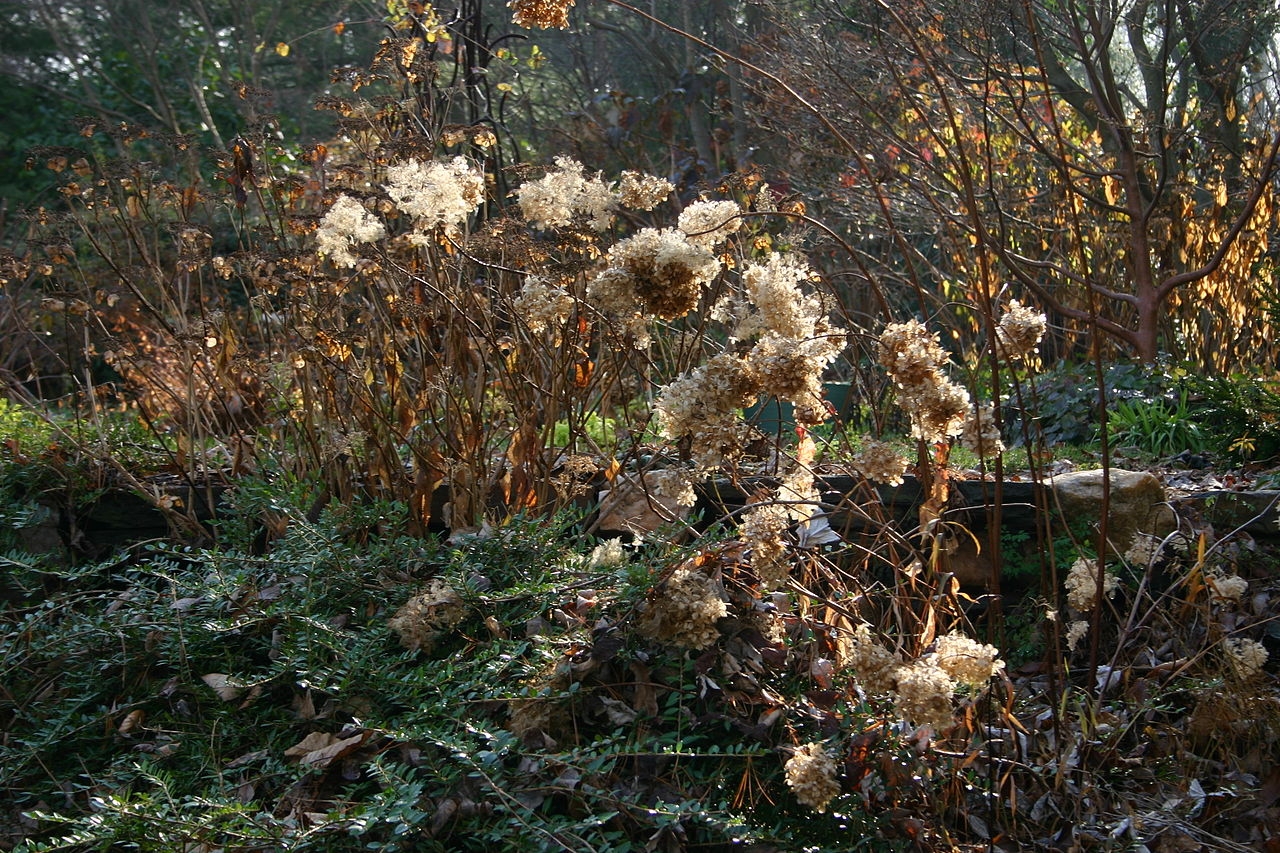
This is one of the most common questions among New England homeowners. The answer is nuanced: most hydrangeas do not need to be cut down for winter, and doing so can actually harm certain varieties. For bigleaf, oakleaf, and mountain hydrangeas, leaving the stems intact protects next year’s flower buds. The dried flower heads and stems also provide winter interest and some protection against harsh New Hampshire winds.
However, smooth and panicle hydrangeas benefit from late-winter pruning before new growth emerges. In New England, this typically means cutting them back in late February or March, just as the worst of winter is ending.
Hydrangea bud
When should I cut the heads off my Hydrangeas?
Deadheading – removing spent blooms – serves both aesthetic and practical purposes:
- For bigleaf hydrangeas: In New England’s climate, it’s best to leave faded blooms on the plant through winter rather than removing them immediately after they fade. The old flowerheads provide valuable frost protection for the tender growth buds beneath them. Wait until early spring to remove the dead flowerheads, cutting back the stem to the first strong, healthy pair of buds below the faded bloom. In milder regions homeowners might deadhead sooner, but New England winters make this protective strategy essential.
- For panicle and smooth hydrangeas: Old blooms can be removed anytime, or left for winter interest and cut during late-winter pruning sessions when the entire plant is being shaped.
- For lacecap hydrangeas: These hardier varieties can have faded flowerheads removed after blooming to prevent seed development, which otherwise drains energy from the plant. In New England specifically: Many homeowners leave seed heads on most hydrangea varieties through winter to add visual appeal to snow-covered gardens while protecting the plant from harsh temperatures.

Hydrangea shrubs in the winter
Which Hydrangeas should not be cut back in the fall?
This is crucial information for New England homeowners: never cut back bigleaf, oakleaf, or mountain hydrangeas in fall or winter. These varieties set their flower buds on old wood during late summer and fall. Cutting them back during autumn or winter pruning hydrangeas removes all the buds that would have produced next summer’s flowers.
The “prune in fall” mistake is the primary reason many New England homeowners struggle with non-blooming hydrangeas. However, an additional major issue for losing blooms in our region is bud frost damage. Bud frost is a common affliction for hydrangeas in New England winters, especially when late frosts occur in spring after the buds have begun to swell. This frost damage can kill flower buds even on properly pruned plants, which is why leaving old flowerheads on through winter provides crucial protection. Our shorter growing season means these plants have limited time to set buds, making preservation of old wood even more important.
Common mistakes in Hydrangea pruning:
Avoiding these pitfalls will help New England hydrangeas thrive:
- Pruning bigleaf varieties in fall or winter: This removes flower buds and results in no blooms the following season.
- Over-pruning: Removing more than one-third of the plant in a single season can stress the shrub.
- Cutting back frost-damaged stems too early: Wait until new growth emerges in spring to assess true damage.
- Using dull tools: Clean, sharp pruners prevent disease transmission and create cleaner cuts that heal faster.
- Ignoring variety-specific needs: Not all hydrangeas respond to the same pruning approach.

Hydrangea quercifolia in the fall
When to call professional pruning services
While basic hydrangea pruning is manageable for most homeowners and gardening enthusiasts, certain situations warrant professional expertise. If you’re dealing with overgrown specimens that haven’t been maintained for years, managing multiple hydrangea varieties across a large property, or seeking specific shaping techniques to complement your landscape design, professionals bring valuable knowledge and specialized tools.
In New England, experienced arborists and landscapers understand how our climate affects hydrangea growth patterns and can implement advanced pruning techniques that balance plant health with aesthetic goals. For complex rejuvenation pruning or when working with valuable mature specimens, professional services ensure optimal results while minimizing risk to your plants.
Hydrangea pruning doesn’t have to be intimidating. By understanding the specific variety in your landscape, timing cuts appropriately for New England’s climate, and avoiding common mistakes, you’ll enjoy spectacular blooms season after season.
Transform Your Space Today
At Painted Fern Gardening, we see container gardening and garden bed design as a living art form. From thoughtfully chosen pots to sustainable soil mixes and plant pairings that change with the seasons, every container tells a story. Whether you’re looking to grow your own food, brighten your indoor space, or bring creative beauty to your porch through garden beds or container gardening, our designs combine artistry with horticultural expertise rooted in the rhythms of Southern New Hampshire’s seasons.

Contact us today to schedule your consultation and begin your journey toward creating an enchanting garden that will bring joy, beauty, and ecological benefits to your outdoor space for years to come.
Ready to transform your landscape into a thriving garden? Contact Painted Fern Gardening at (603) 580-3840 or visit paintedferngardening.com